
Business tools guide
Electric gate not working: what to check, who to call and what the visit costs
By Jason Burns Published 9 minute read
First, make it safe
An automatic gate that has stopped is an inconvenience. One that is moving wrongly is a machine fault. HSE's powered gates guidance says that where gates "are found to be dangerous they should be taken out of use immediately until all of the safety concerns have been adequately addressed", and that users "should know how to switch the machine off, or to a safe condition (eg hold-to-run mode) promptly in the event of impending danger or malfunction".
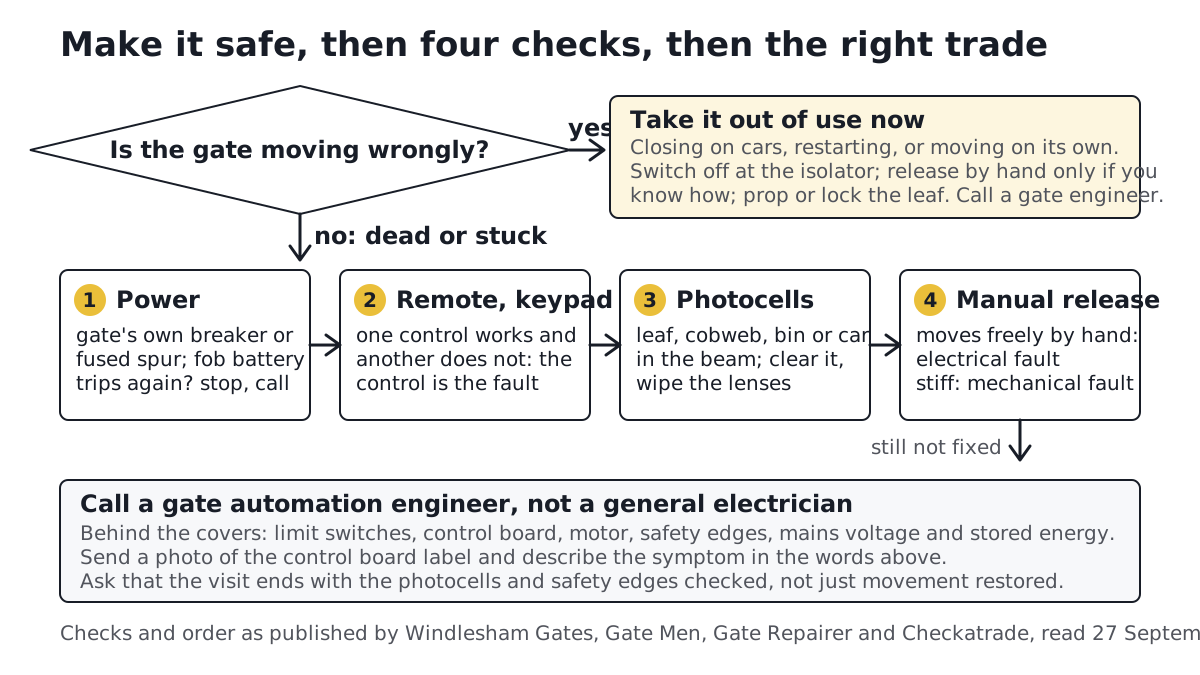
Safe first, then the four checks, then the right trade.
So the first question is not who to call. It is whether the gate is doing anything unexpected: closing on cars, stopping and restarting, moving when nobody has pressed anything. If so, switch it off at the isolator or control panel, release it by hand if you know how, and prop or lock it so it cannot swing. Gate Repairer's High Wycombe page says the same from the trade side: "Stop operating the system and keep people and vehicles away from its movement area."
If the gate is simply dead, or stuck and not moving at all, you have time to check a few things.
Electric gate repair is a job for a gate automation engineer rather than a general electrician, because the fault can sit in the motor, the control board, the safety sensors or the mechanics, and the fix has to leave the gate safe as well as moving. The next three sections cover what you can check yourself, how to read the symptom, and how to pick the engineer.
Four checks you can do without tools
None of these involves opening the motor or the control box. Gate Repairer is blunt about that: "Do not dismantle automation or force the gate manually unless the correct release procedure is understood and it is safe to do so."
1. Power. Windlesham Gates' answer for a gate that stops suddenly starts here: "Check the power supply, any remote control batteries, and ensure there are no physical obstructions." Find the gate's own breaker or fused spur, in the consumer unit or an outbuilding. Gate Men list "power issues or tripped fuse" among their most common call-outs. If the breaker trips again when reset, stop and call. Something is drawing fault current.
2. Remote and keypad. Change the fob battery. Try the keypad or intercom if there is one. If one control works and another does not, the gate is fine and the control is the fault.
3. The photocells. Most gates have a pair of small sensors either side of the opening at about knee height. A leaf, a cobweb, a wheelie bin or a parked car in the beam and the gate refuses to close. Clear the line and wipe the lenses. Gate Repairer explains why this matters before anyone buys parts: "A gate that appears to have a failed motor may instead be held off by a photocell, safety edge, stop circuit or control-board input. Testing first helps avoid unnecessary parts."
4. The manual release. Checkatrade's repair page says "Most systems have a manual release mechanism that allows you to open or close the electric gate safely during a power cut." The installer should have shown you where the key goes. If you can release the gate and it swings or slides freely by hand, the mechanics are fine and the fault is electrical. If it is stiff or grinds, the problem is a hinge, roller or track, and resetting the control board will not help.
If those four do not fix it, stop. The next layer is limit switches, control boards, motor components and safety edges, and all of it sits behind covers that carry mains voltage or stored mechanical energy.
Reading the symptom
The trade pages that rank for this query list the same handful of faults. Gate Men's list of "the top problems we're called out for": gates not opening or closing; power issues or tripped fuse; faulty limit switches or motors; damaged or misaligned safety sensors; stuck gate arms or noisy operation; keypad, intercom or remote failure; and "intermittent automation faults (especially after rain or power cuts)".
Gate Repairer's page sorts the causes by symptom. "A gate that will not move may be held off by a safety device, stop circuit or access input, while slow or uneven movement can point to hinges, rollers, alignment or ground movement." A gate that stops part way and reverses points to "mechanical resistance, alignment problems, force behaviour or safety-device activation". Its diagnostic order is "power, control logic, safety inputs and mechanical resistance checked in a structured order".
Windlesham adds the seasonal cause. "Moisture ingress could lead to electrical faults", so check "that water doesn't pool around" the motor housing or any underground components. Gate Men's "especially after rain" and Gate Repairer's article on underground motor failure filed under water ingress are the same fault seen from two companies.
Describe what you see in those terms when you call. A gate that opens but will not close is a different job from one that does nothing at all, and the engineer can bring the right parts.
Who to call
Start with whoever installed it, if they still trade. They hold the settings, the handover pack and any force test figures. A second company can work from nothing, but it costs more of their time.
If the installer has gone, you want a gate automation engineer, not a general electrician and not a fencing contractor. When we searched for electric gate repair on 27 September 2026, Google returned a local pack of three companies, a block of directory listings from Checkatrade and Trustpilot, and related searches for London, Manchester and Nottingham. Reviews on those sites tell you whether people were happy with the visit. They do not tell you whether the technician was qualified to set the safety devices, so the checks below still apply to a company with a five-star rating. HSE's page on responsibilities says "it is recommended that the competence and expertise of anyone working on powered gates is checked", and describes what that competence is: "appropriate mechanical, electrical, hydraulic, or pneumatic knowledge, together with the ability where necessary to verify and test both parts and the final product". It adds that testing force limits can need specialist equipment. An electrician can find a blown fuse. Setting the force on a swing gate so it stops when it meets a child is another trade.
HSE names two bodies that "can provide specific powered gate awareness / competence training": Gate Safe and the Door and Hardware Federation. The companies ranking for this query display one or both. Gate Men say their engineers are "certified by Gate Safe"; Gate Repairer shows a Gate Safe registered installer badge; 1st Choice Security Systems describes its installers as DHF trained. A badge is a claim, not a check. Ask what the training covered and when.
Two more things to ask before booking.
- Brands. Gate Men list the motor brands they cover: "Roger Technology, BFT, CAME, NICE, DEA, FAAC, and Cardin". Read the label on your motor or control board and ask whether the company carries parts for it.
- Safety after the repair. HSE says whoever works on a gate is responsible for leaving it safe, and that this can mean isolating it from the power supply if it cannot be made safe on the day. Ask whether the visit includes checking the safety devices after the repair, not just restoring movement. Gate Repairer states the principle: "A repair that restores movement must not ignore trapping, crushing, shearing or impact risks."
What it costs
Published figures, fetched on 27 September 2026 and quoted as those companies' own numbers.
Checkatrade's electric gate repair page gives national guide figures. It puts "the average callout fee for most companies" at £50 to £100, hourly labour at £65 to £85, a replacement for "a faulty or broken motor" at £300 to £1,800, and repairing or replacing an intercom at £250 to £1,200. Its cost guide table carries the same call-out and labour figures and is marked "Last updated: May 2024", so treat that pricing as two years old.
Gate Repairer Ltd publishes its own call-out prices for High Wycombe. A standard weekday call-out is "£160 + VAT" and "includes travel and the first hour on site", then "£80 + VAT per hour" after that. An evenings and weekends call-out is "£320 + VAT". Emergency attendance "may be charged at £340 + VAT including the first hour". "Travel beyond 15 miles may be charged at £0.45 per mile." Parts are "quoted or agreed before supply and installation".
So a straightforward weekday fault on that company's published rates is one call-out plus parts. A failed underground motor on a ten-year-old gate is a different conversation. Checkatrade says well-maintained gates can last 15 to 20 years while "motors and control units may need servicing or replacement" every 5 to 10 years, and suggests weighing repair against replacement once the gate is "more than 10 years old or the repair costs are creeping higher than expected".
On insurance, Checkatrade notes that "some home insurance policies may cover electric gate repairs if the damage is caused by storms, accidents, or vandalism". Read the policy before paying.
What the visit involves
Gate Repairer describes the sequence. Before attendance: "Tell us whether the gate is stuck, intermittent, noisy, damaged or overdue a service", and provide "the full postcode, gate type and safe photos of the motor, controller or visible damage". The company then confirms "the applicable call-out charge and any travel-related costs". On site: "We test the system, complete agreed work and explain any further recommendations." Its knowledge hub adds: "send a photo of the control panel label and a short video of the issue, but only if it is safe to do so."
That photo matters more than it sounds. The control board label tells the engineer the make and model, so they arrive with the right parts. Gate Men say they "aim to fix most problems on the first visit" because their vans carry stock. That only works when they know what to stock.
Expect the engineer to check the safety devices on the way out, and ask for a written note. HSE's responsibilities page says records of repair and testing help show what was done and "how the gate is being left safe". The note should say what was found, what was replaced, and the state of the photocells and safety edges when they left.
Domestic gates
HSE is clear that "health and safety law does not apply to domestic householders with (privately owned) powered gates, but will apply to all those working on them as part of a work activity. However, householders may be sued for any harm or damage their gates cause." On your own driveway there is no legal duty to service or test. The engineer you hire has duties. And if the gate hurts someone, the absence of a duty on you will not help much.
Questions people ask
The first three of these sit in Google's "people also ask" box for electric gate repair, and the fourth follows from the lifespan question in the same box. Short answers here; the detail and the sources are in the sections above.
How much does it cost to repair an electric gate?
On the published figures: a call-out of £50 to £100 and labour of £65 to £85 an hour on Checkatrade's guide, or £160 plus VAT including the first hour on Gate Repairer's weekday rate, then parts. A new motor is the expensive part, £300 to £1,800 on Checkatrade's range. A fob battery or a photocell wipe costs nothing, which is why the four checks above come first.
What are the most common faults on electric gates?
The trade lists are consistent: no power or a tripped breaker, a photocell blocked or misaligned, a failed limit switch or motor, a stuck or noisy leaf from hinges or track, a dead remote or keypad, and intermittent faults after rain. Half of those are fixed by the owner in five minutes. The other half need the engineer, and the symptom tells you which half you are in.
Can you manually open an electric gate?
Usually, yes. Checkatrade's guide says "most electric gates have a manual release mechanism for use during a power cut", that you will "normally need a key to disengage the motor safely", and to avoid forcing the gate. If you do not know where the release is, that is the first question for the installer or the engineer, before any fault.
Is it worth repairing an old gate?
Checkatrade's rule of thumb is to weigh repair against replacement once the gate is past ten years old or repair bills keep climbing, on the basis that gates last 15 to 20 years and motors and control units rather less. A second motor on a sound gate is normal. A third motor on a gate with a sagging post is money after bad. Ask the engineer for a written opinion on the structure before paying for the drive.
Where GateHQ fits
GateHQ is in development and cannot be used yet; it is planned as a directory of electric gate engineers with job enquiries.
Sources
Fetched on 27 September 2026:
- HSE, Powered gates: the basics
- HSE, Powered gates: legal responsibilities
- HSE, Ensuring powered doors and gates are safe
- Gate Men, electric driveway gate repairs post; Gate Repairer Ltd, knowledge hub and High Wycombe repair page; Autogate PSR, electric gate repair guide; Checkatrade, electric gate repair in Uxbridge, electric gate repair in London and its "Find electric gate repair near me" cost guide; 1st Choice Security Systems, electric gates in Bedford; Windlesham Gates, electric gate maintenance tips. Commercial pages, not linked from here.
Related guides: how often an automatic gate needs servicing and automated gate maintenance records.